Japan
Discover Fukuoka with a plan that fits you.
A bowl of noodles, a little sea air, an evening well spent.
Fukuoka brings together a modern city centre and quieter historical spaces, with the gardens and castle remains around Ohori Park offering a pause from busy Hakata. From there, Dazaifu’s shrine precinct makes an easy cultural excursion, showing how the city connects modern Kyushu with the region’s layered past.
Airport → centre
5 minKuko Line from ¥260Arriving
Arriving in Fukuoka
Fukuoka Airport's domestic terminal has a subway station on the Kūkō Line. International-terminal arrivals must check the airport's terminal-transfer arrangements rather than assuming they step straight onto the platform. Verify the last rail service against your landing time. Fukuoka Airport's own information places the subway station at the Domestic Terminal. International arrivals generally use the airport's free interterminal shuttle before boarding the subway; carrying luggage to the station is therefore a different journey from stepping out of a domestic flight. Check the airport's current shuttle stop and operating arrangements as well as the subway's final departures. If the hotel is near Tenjin rather than Hakata, select the appropriate line and exit instead of assuming every city-centre stop is interchangeable.
Fukuoka Airport (FUK) · Published routes to the city, checked with the operators.
Kuko Line
- Time
- 5 min
- Price
- ¥260
City-centre taxi · Hakata Station (primary central hub); Tenjin Station alternative
- Time
- 15–20 min
International-terminal Nishitetsu bus · Hakata Station
- Time
- 18 min
- Price
- Check operator
Where to stay
Choosing where to stay
Hakata is practical for intercity rail departures and a short airport connection. Tenjin works well for eating out, shopping and late evenings. Pick the base that fits your actual itinerary instead of booking solely by advertised nightly price. Hakata Station is convenient for intercity rail and a short departure to other Kyushu cities, while Tenjin provides a different concentration of restaurants, shops and late evening activity. A hotel near an airport subway stop can be practical without necessarily placing a visitor next to every attraction. Consider where the day's return will end, and whether the property offers safe luggage storage before a later flight or rail departure.
Getting around
Getting around Fukuoka
The subway handles many central trips, but it does not replace every bus, walking route or longer train connection. Keep a Dazaifu outing separate from routine in-city travel. Verify the operator and ticket validity before buying a pass. Fukuoka's compact central districts invite some walking, but subway lines, city buses and regional rail have different roles. A day trip to Dazaifu is not the same as an ordinary journey between Hakata and Tenjin; confirm the operator, transfer and ticket selected for that destination. For the airport, distinguish the Domestic Terminal subway access and the international shuttle leg. Avoid describing any local pass as covering every regional railway without its actual conditions.
Experiences
Things worth making time for
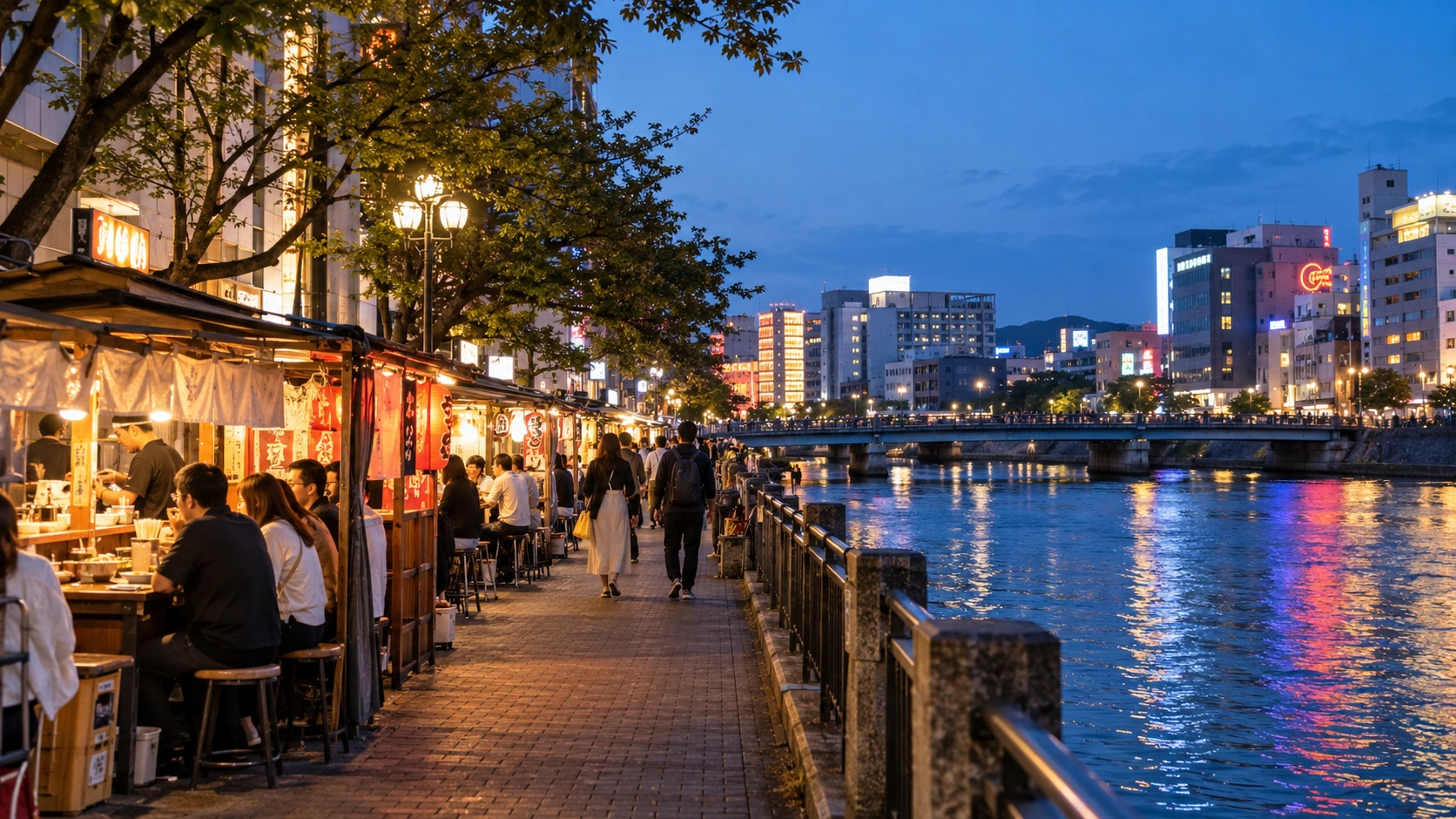
Walk Tenjin's side streets and explore the Hakata area, then decide whether a garden, museum, shopping trip or yatai food-stall evening merits extra spending. The official city guide describes these areas distinctly; no single generic activity allowance suits both. A food-led evening around Hakata or Tenjin can include yatai street food stalls, whose opening and seating depend on the particular vendor and weather. Choose one cultural garden or museum for a daytime visit and leave time to enjoy the neighbourhoods themselves. A regional shrine outing is a separate travel choice rather than another stop within a compact urban food walk. Pay attention to customs in religious places and to queues at small food stalls.
What will your Fukuoka trip actually cost?
Choose your dates, travellers and real prices. FAREVEAL shows unknown items rather than pretending every category is covered.