Japan
Discover Kamakura with a plan that fits you.
Old temple paths and a little sea air.
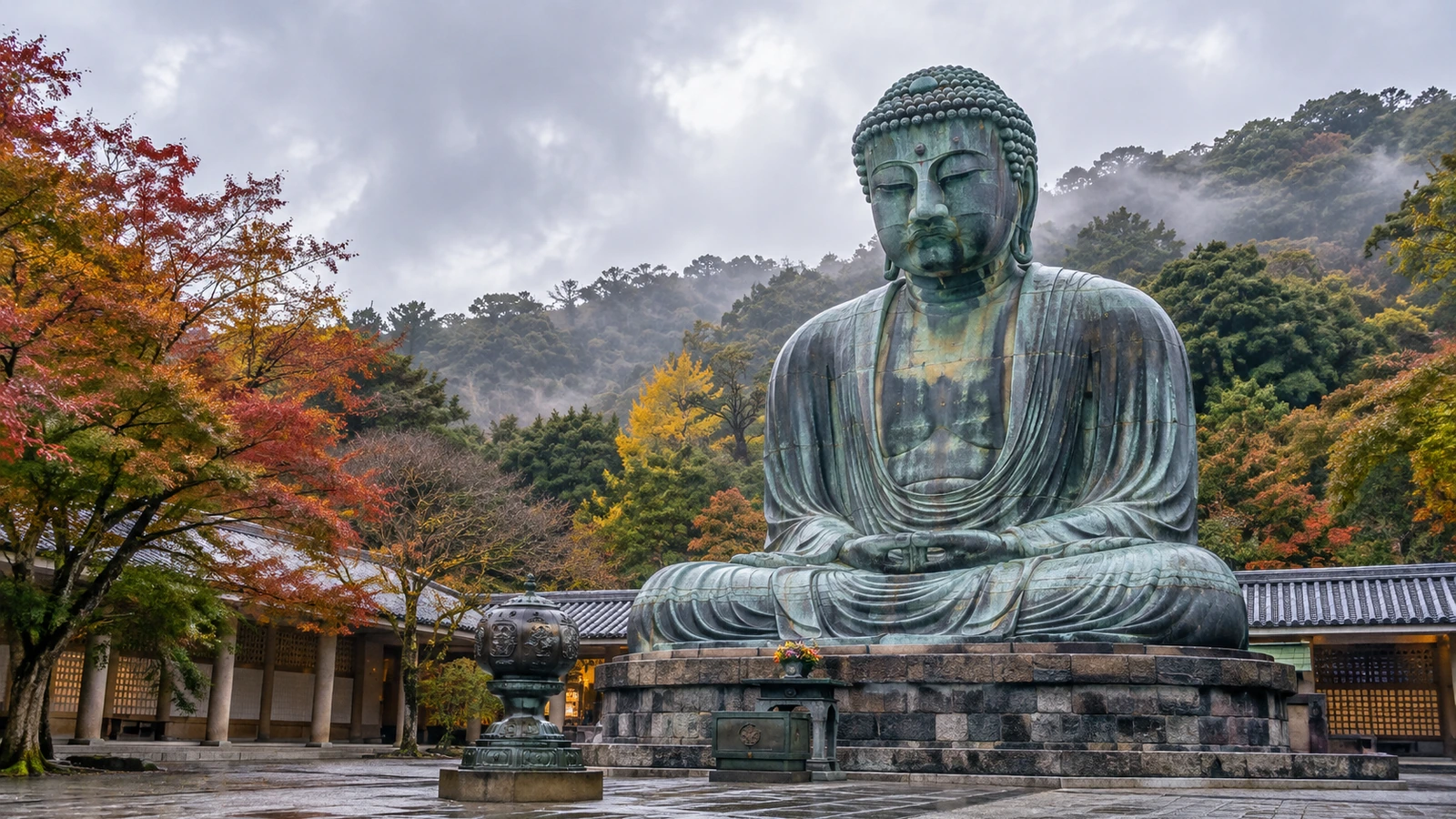
Kamakura’s Great Buddha stands in open air at Kōtoku-in, a bronze image cast in the 13th century and still one of the city’s defining encounters. The surrounding temple precincts and wooded slopes hint at Kamakura’s role as a medieval political centre, making it rewarding to look beyond the famous statue.
Arriving
Arriving in Kamakura
Kamakura is commonly reached by JR rail from Tokyo, rather than through its own major airport. The Japan National Tourism Organization suggests an approach via Kita-Kamakura for temple visits; check your actual train route and decide whether to start at Kita-Kamakura or Kamakura station. JNTO's itinerary starts at Kita-Kamakura for a temple-led walk, which is not the same station as central Kamakura. If your first destination is Hase and the Great Buddha, JR rail to Kamakura followed by Enoden may fit better. Choose the stop that starts your actual route rather than assuming a single rail exit is closest to every landmark. Include a realistic buffer for crowds and changing lines on the return to Tokyo.
Where to stay
Choosing where to stay
Staying near Kamakura station supports central walking and rail connections, while Hase and coastal areas offer a different rhythm. If visiting from Tokyo instead, avoid adding an invented Kamakura hotel price to a trip where you are not staying overnight. An overnight visit lets travellers split temple courtyards and coastal time into separate sessions, avoiding the need to rush every paid entry into one afternoon. For a Tokyo day trip, compare the price and time of two rail journeys against the benefits of staying in Kamakura; do not invent a hotel charge for a city where you are not sleeping. Hase can also be a useful base for a less station-centred itinerary.
Getting around
Getting around Kamakura
Walking, JR rail and the Enoden railway can serve different parts of a visit. The Great Buddha is approached from Hase station on the Enoden; allow for the walk and check the rail operator's ticket rules. Do not assume a Tokyo metropolitan day pass covers every local railway. The JR route into Kamakura and the Enoden line towards Hase are different rail services. JNTO describes Hasedera near the Great Buddha, making a compact pair for travellers who prefer not to cross the city repeatedly. Temple-to-temple walking involves slopes and steps in some areas, so visitors with mobility needs should check the exact site accessibility rather than trusting a flat map.
Experiences
Things worth making time for
Japan's national tourism guide links Kita-Kamakura's temples, the Great Buddha and Yui-ga-hama beach within a possible cultural day. Decide whether temple entries, a museum or a coast-focused afternoon are really priorities; the seaside walk itself need not be ticketed. JNTO presents Engakuji near Kita-Kamakura as a Zen temple with its own distinct access, while Hasedera and Kotoku-in's Great Buddha are separate stops nearer Hase. A thoughtful day can choose one of those clusters and leave time for the coast, rather than attempting every temple in one afternoon. Check each admission and photography policy individually; the seaside and town streets offer a different, less ticket-focused experience.
What will your Kamakura trip actually cost?
Choose your dates, travellers and real prices. FAREVEAL shows unknown items rather than pretending every category is covered.