North Macedonia
Discover Ohrid with a plan that fits you.
A little lakeside stillness beside the old stone town.
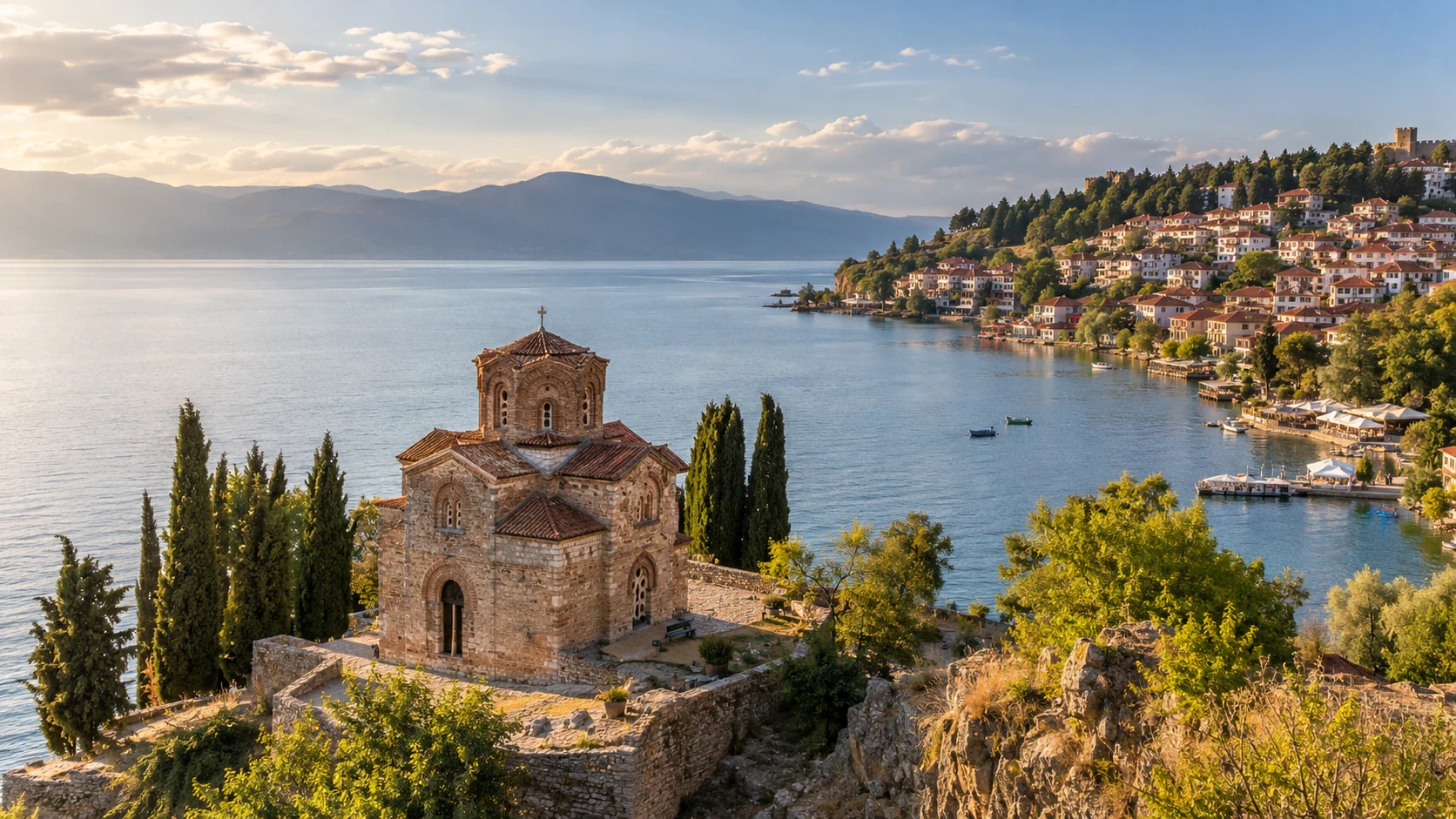
Views from Ohrid’s upper streets stretch across the lake toward Albania, revealing how the town belongs to a larger transboundary landscape. UNESCO recognises the region for natural and cultural values together, placing centuries of settlement and the surrounding ecosystem within one shared frame.
Arriving
Arriving in Ohrid
Ohrid airport is outside the old town, while regional coaches arrive at a different point from the historic lakeside. Confirm whether your accommodation includes a transfer and how to reach an address up the hill; it may not be close to the waterfront even when the map distance is small. The international airport is outside the lakeside historic core, while regional coaches can terminate at another point from a waterfront hotel. A property on higher old-town streets may require a steep final walk even when the map distance looks short. Ask for the actual airport or station pickup details, and keep an additional taxi or local connection distinct from the international air ticket. A boat service should not be assumed to substitute for a normal town arrival transfer.
Where to stay
Choosing where to stay
A base near the lakefront and old town suits central walking, but old-town streets climb steeply toward higher church sites. A lakeside property outside the centre may need road transport or a longer walk; compare location and mobility needs. Accommodation near the old harbour and pedestrian waterfront helps with lake walks and evening restaurants, while historic uphill locations can provide wider views but require more effort with luggage. Staying along a distant lakeshore outside the town may involve road transport for every museum or church visit. Compare whether you want easy central evenings or a quieter lakeside setting before committing to the cheapest advertised room.
Getting around
Getting around Ohrid
Walk the waterfront and historic lanes where practical, with local or regional transport needed to reach farther beaches and lakeside monasteries. A boat outing has different weather and ticket conditions from a public intercity bus. The protected Lake Ohrid region extends far beyond the centre. UNESCO describes a mixed natural and cultural World Heritage area, not a single entrance gate with a universal visitor ticket. Public streets can be walked, while a trip to a monastery farther along the shore needs an appropriate road or boat option with a reliable return. Check the actual pier, operator and weather conditions before including a lake cruise as guaranteed everyday transport.
Experiences
Things worth making time for
Explore Ohrid's church-lined historic core and views of Lake Ohrid, preserving respect for worship and protected heritage. UNESCO describes a combined natural-and-cultural heritage region; any boat tour, paid church interior or outside monastery needs separate planning. UNESCO highlights the exceptionally long natural history of Lake Ohrid and the area's heritage of churches and scholarship. A thoughtful itinerary can start with central streets and selected places of worship, observing opening and photography rules. A paid museum interior or a boat outing is a separate choice. The freshwater ecosystem is part of the area's value, so visitors should respect protected shorelines rather than treating every section as an unrestricted beach.
What will your Ohrid trip actually cost?
Choose your dates, travellers and real prices. FAREVEAL shows unknown items rather than pretending every category is covered.