Brazil
Discover Salvador with a plan that fits you.
Let the colours catch your eye and the rhythm catch your step.
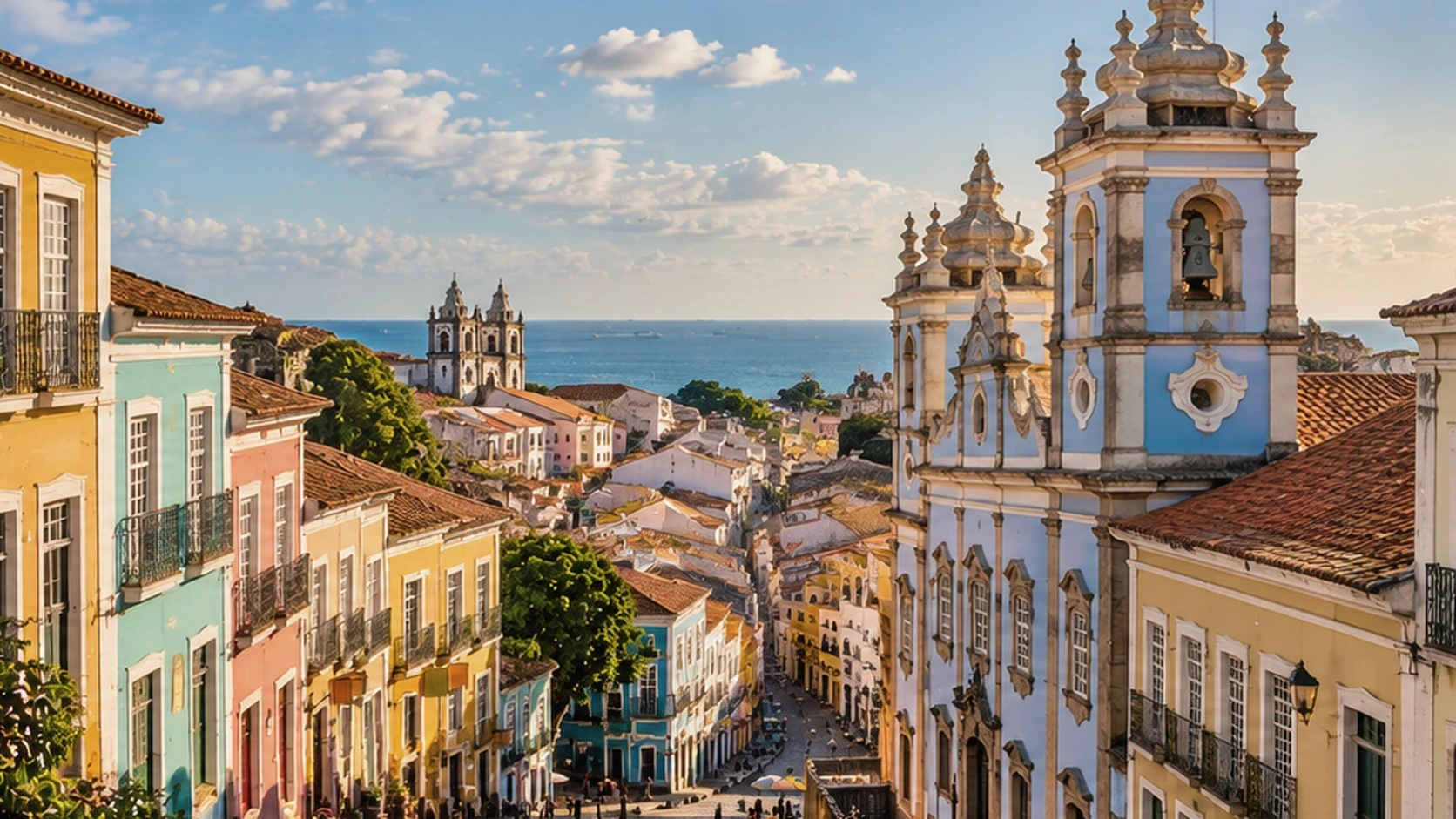
Salvador’s old centre occupies two levels: an upper city of administration and churches looks down over the lower city, where trade once gathered around the port. That dramatic split between escarpment and bay gives the UNESCO-listed historic district an urban structure unlike any other Brazilian capital.
Arriving
Arriving in Salvador
Salvador's airport is away from the historic centre; check the actual road or metro-based journey to accommodation. A hotel near a beach may use a different transfer from one in the Upper City, and luggage access can be difficult on steep streets. Salvador International Airport is not adjacent to Pelourinho, Barra or Rio Vermelho. Verify whether the booked hotel is in the Upper City or nearer a beach, and plan the final road or transit link from the actual airport terminal. A transfer advertised simply as 'Salvador centre' may not reach a steep old-town address with luggage. Review the route against the time of arrival instead of assuming that every public service operates equally late.
Where to stay
Choosing where to stay
Pelourinho suits architecture and cultural history with evening-venue considerations, while Barra offers a different seaside rhythm. A room in Rio Vermelho is another choice for food and nightlife; compare actual evening travel and local conditions rather than relying on straight-line distance. Pelourinho and the Upper City favour heritage walking and cultural venues, while Barra and Rio Vermelho can be better bases for coastal or evening-oriented trips. The difference matters especially after a concert or dinner, when the return may not be on the same public route. Compare realistic access and the full room charges rather than selecting a beach photograph with no clear neighbourhood identity.
Getting around
Getting around Salvador
Central Salvador contains hills and the division between Upper and Lower City. The Elevador Lacerda is an iconic urban connector with its own operating conditions; it does not replace all transport to distant beaches or the airport. The historic Upper and Lower City are linked through the city's steep urban landscape, including the Elevador Lacerda when operating. It should not be treated as a transport solution to the airport or distant beach districts. Walking in the old centre requires attention to slopes, heat and local access conditions; use official information and a reputable transport option for journeys outside the heritage core.
Experiences
Things worth making time for
Explore the Pelourinho streets with respect for the city's Afro-Brazilian cultural heritage, and decide whether museums, music venues or guided heritage visits match your interests. A beach-focused outing deserves its own travel and safety plan. UNESCO recognises Salvador's historic centre for its architecture and urban history, while Brazil's tourism portal highlights a wider Afro-Brazilian cultural landscape. A responsible visit can include public streets and selected museums or performances without treating every community celebration as a tourist ticket. Support genuine local cultural operators and respect religious and privacy rules at sensitive sites. A Barra beach outing is a separate excursion from the colonial centre.
What will your Salvador trip actually cost?
Choose your dates, travellers and real prices. FAREVEAL shows unknown items rather than pretending every category is covered.