France
Discover Strasbourg with a plan that fits you.
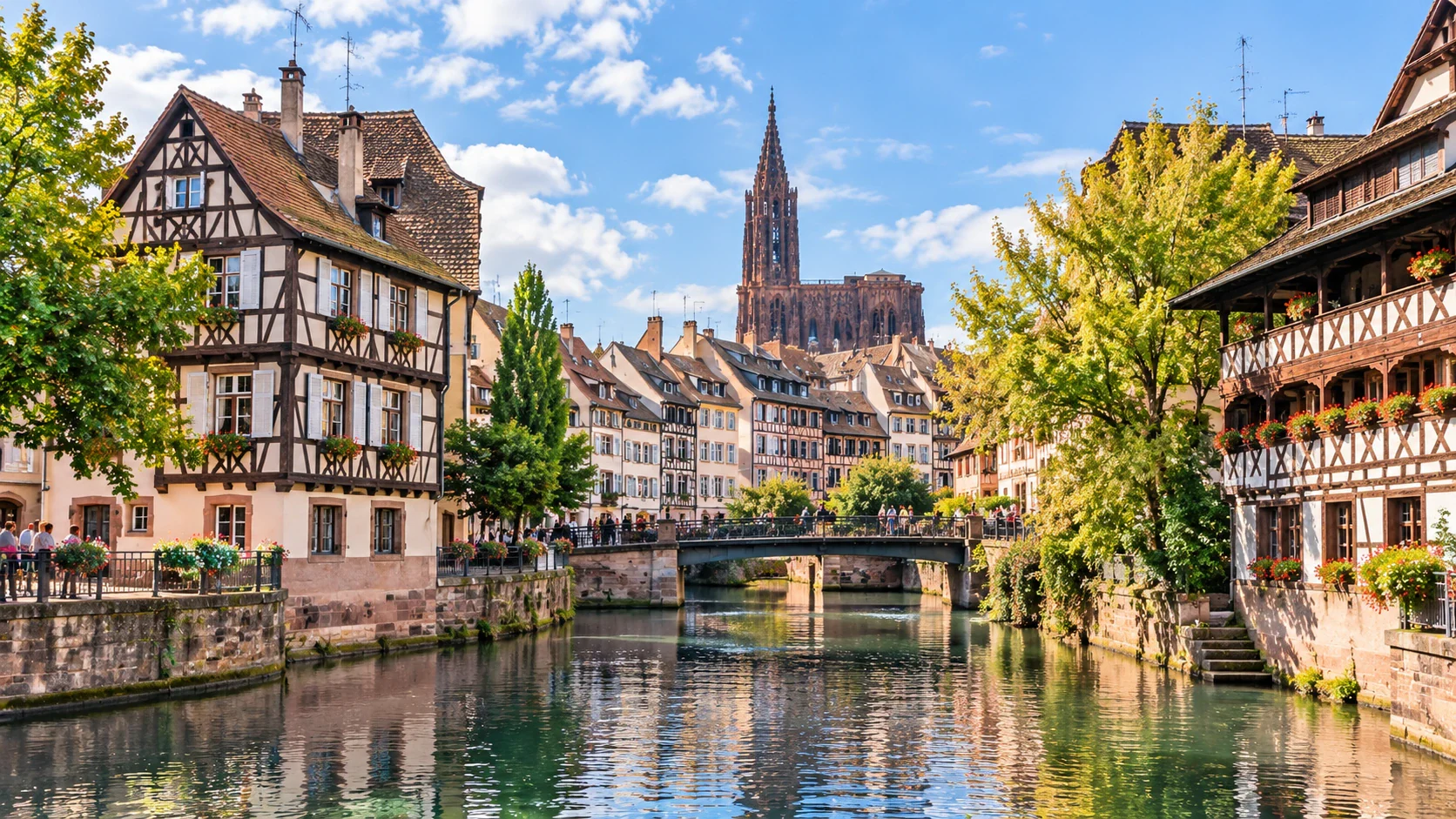
Follow the canals past the half-timbered houses.
Strasbourg’s story shifts across the Ill: Grande Île preserves a medieval centre, while Neustadt reveals the scale of the German imperial city built after 1871. Walking between them exposes a genuine architectural dialogue, where the city’s French and German histories remain legible in stone, street width and civic purpose.
Arriving
Arriving in Strasbourg
Strasbourg's main railway station is a convenient gateway to the old centre. Airport arrivals can use a regional rail connection, but confirm the precise service and change for your date rather than assuming every flight lands next to the cathedral. Strasbourg's station provides rail access near the old core, but the airport-to-city rail link is a separate journey that needs a current operating-day check. If a hotel is inside Grande Île's pedestrian area, the last part of a trip may be on foot from a tram stop rather than a taxi dropping luggage directly at the door. Compare the station approach with any accommodation in Neustadt or the European Quarter before choosing the shortest-looking route.
Where to stay
Choosing where to stay
The Grande Île and Petite France put timber-framed streets within walking distance, while the station area is practical for short rail stays. A hotel in the Neustadt district suits a different architectural itinerary; compare tram stops and luggage routes. Petite France and Grande Île place canals and the cathedral streets near evening cafés, while the station area suits a rail-led short visit. Neustadt is a distinct architectural neighbourhood and may be more convenient for a different set of sights. During major Christmas-market dates, demand and pedestrian restrictions can alter both hotel prices and how you reach the entrance. A non-peak visit can use the same central landmarks with a different pace.
Getting around
Getting around Strasbourg
Walking links many central sights while the tram covers outer districts and the European Quarter. The historic centre includes bridges and cobbled pedestrian areas; verify accessibility and any ticket validity for regional trains or airport transfers. Strasbourg's tram is useful for joining the main station, central streets, Neustadt and the European institutions, whereas regional rail journeys and the airport transfer need ticket checks of their own. Within Petite France, the canals and footbridges invite walking, but some routes have cobbles and steps that deserve accessibility checks. Do not treat a public tram ticket as admission to the cathedral tower or a paid city museum.
Experiences
Things worth making time for
Explore Petite France's waterways, covered bridges and Vauban Dam, then choose whether to enter the cathedral or a museum. Strasbourg's Neustadt provides another architectural route; guided mini-train tours are optional rather than required. The tourism office describes Petite France's historic waterways, covered bridges and panoramic views towards the cathedral. The cathedral is a living place of worship, so ordinary access and special tower or guided experiences can have different rules. Strasbourg's famous Christmas markets add a seasonal layer, not a year-round guarantee; dates, security arrangements and market locations should be checked for the year of travel. A visit outside December still offers varied heritage walking and museums.
What will your Strasbourg trip actually cost?
Choose your dates, travellers and real prices. FAREVEAL shows unknown items rather than pretending every category is covered.