China
Discover Wuhan with a plan that fits you.
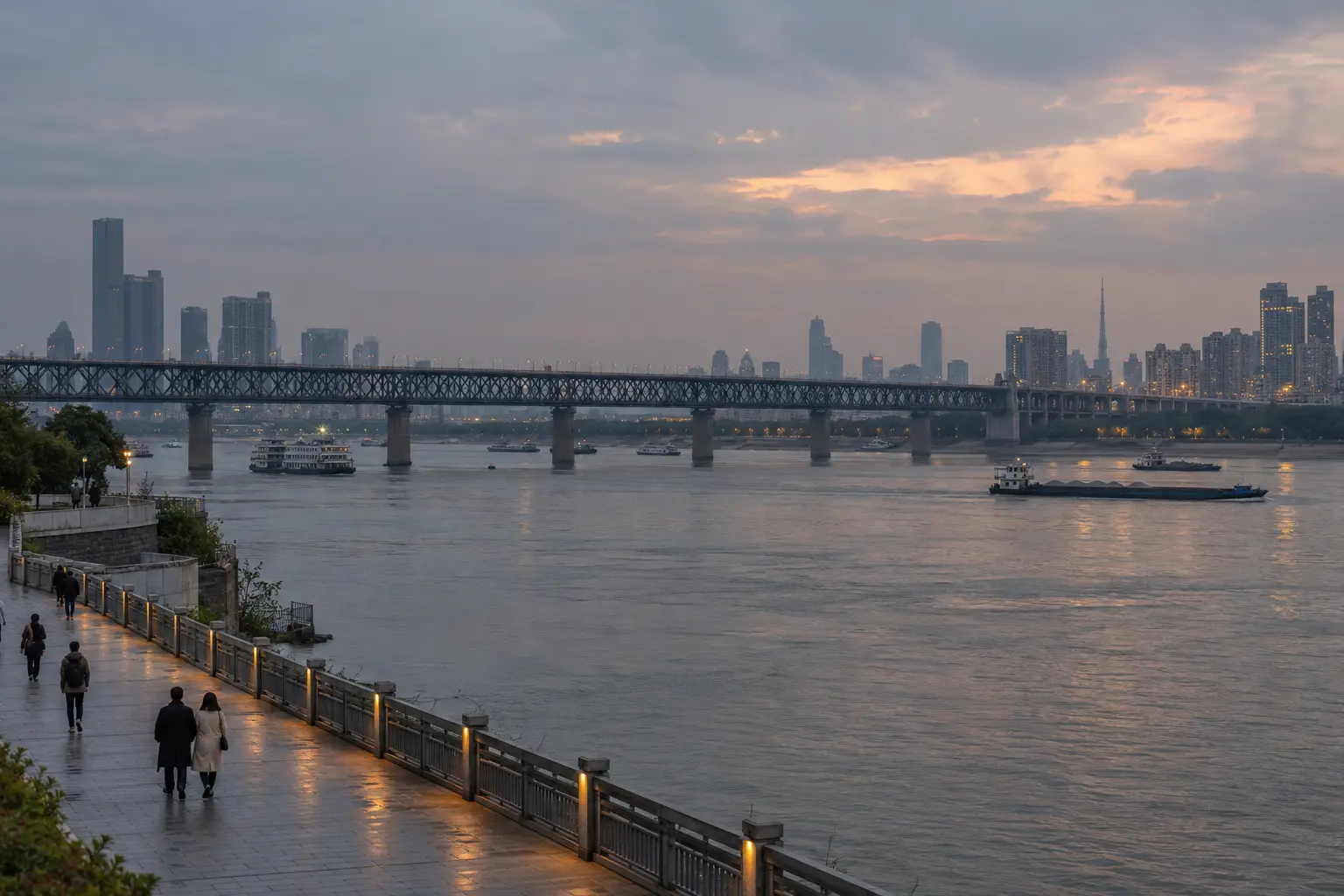
Let the Yangtze give the city a sense of scale.
At Hankou’s Customs House, a clock tower beside the Yangtze recalls the port that linked inland China to international trade after 1861. The museum traces Wuhan’s modern history through documents and objects, giving the riverside skyline a grounded story beyond its celebrated river views.
Arriving
Arriving in Wuhan
Wuhan Tianhe International Airport and the city's several major rail stations serve different corridors. Check whether your train uses Wuhan Station, Hankou Station or Wuchang Station and plan a metro connection to the real hotel, rather than treating 'Wuhan' as a single station. Wuhan Tianhe Airport and the large railway stations of Wuhan, Hankou and Wuchang serve different routes. A traveller arriving on high-speed rail should not select a hotel based on a generic city name without checking which station is printed on the ticket. Use the metro to plan the onward route and count the actual river crossing between districts; the urban footprint is large enough that seemingly central destinations can be far apart.
Where to stay
Choosing where to stay
Wuchang makes a different base from Hankou across the rivers, with varying access to historical landmarks, restaurants and intercity stations. Choose an area according to your selected sights and the day of arrival, not just the advertised nightly rate. Wuchang is useful for visitors prioritising the Yellow Crane Tower area, while Hankou provides a different historic commercial atmosphere across the river. A hotel near one rail station may save an early departure yet add repeated journeys to attractions in the other district. Compare the selected sites as clusters and look at the last feasible metro connection after dinner rather than the distance between district labels.
Getting around
Getting around Wuhan
The metro system covers major urban corridors, while river crossings can make road trips longer than map distance suggests. Check the exact metro interchange for Yellow Crane Tower and the East Lake area; they are not one walkable attraction complex. The Yangtze and Han rivers divide the city into corridors where crossing points influence journeys. A trip to East Lake is not a short add-on walk from Yellow Crane Tower; use the metro and local transit planner to arrange a distinct outing. The city has multiple major stations and some routes need changes, so avoid using unverified generic transit times or city-wide ticket prices.
Experiences
Things worth making time for
The municipal government identifies Yellow Crane Tower above the Yangtze as a prominent cultural landmark. Add a lakeside walk or museum in a separate district only with a feasible transport plan; ticketed tower admission and outdoor public space are different items. The Yellow Crane Tower is a historic landmark overlooking the Yangtze, whereas East Lake gives a park-and-water landscape in another part of Wuhan. Choose one focus per half-day and verify admission and access independently. A cultural museum, lakeside activity or river cruise may be booked separately, so do not add all of them automatically to every visitor's budget.
What will your Wuhan trip actually cost?
Choose your dates, travellers and real prices. FAREVEAL shows unknown items rather than pretending every category is covered.